9.26.2008

Fall, in love

Well, summer is gone and we are officially into the throngs of what promises to be a lovely autumn. The leaves are turning their new hues, it’s time to take out the cardigans (yes!) and the drama of Philadelphia’s sunsets has increased tenfold. Let not the close of summer keep us from enjoying excursions, weekending now and then and even going to the beach – my parents went to the Jersey shore last weekend. If you are in the Northeast, this is prime winery time, or at least ripe for taking a drive, walk or bike ride out in the crisp air. Go do it! Everything will be so much better. Last night I took an hour long detour on my way out to dinner just so I could spend time biking in the cool air. Yes, autumn rules. Going out doors is nice. Watch the sunset, forget about your clock, have that cathartic Caspar David Friedrich moment.


When I went up to Hunter New York I sat and watched a sunset with my friends for what felt like an eternity. This was THE moment of my summer, and many things came into perspective just allowing myself to clear my mind and put my focus on the light shifting over the mountains. Yes, it is very corny. I don’t care – sunsets are beautiful. My sister visited some friends in Olympia, Washington in August and came back with her own sunset moment. Apparently, right in the middle of a nice social evening, her friend suddenly shouted out “Quick! We have to go to the coast now or we’ll miss the sunset!” of course this excursion was not a pre-planned part of the day, but nevertheless everyone piled into their cars and zoomed out towards the ocean, with the pure, simple motive of watching the sunset. My sister was very moved by this sudden burst of passion for such a seemingly un-extraordinary event; it was with this moment that it became apparent to my sister that life for her friend in Olympia was precisely about enjoying these moments – the beauty observed in the every-day things is what makes every day enjoyable. It’s classic but true, the west coast just seems more in to standing back and taking in the scenery.

Here is My west coast sunset, seen at Black's Beach in San Diego last March:


And in Hunter, NY:


There is no reason for us not to pursue those instants of secret beauty, to follow and take pleasure in every moment of delight that the simple fact of the world turning offers us. This is life lived to it’s fullest, to take pleasure in the wealth of gorgeous detail all around us. While my weekend in the country was wonderful, I’m finding endless wonders right here at home as well.

Of course taking that trip to Hunter was even better for the friends I was with. I love making things and baking for friends anyway (as I write this I am baking something for my roommate’s gallery reception), so of course I whipped up a little something that we all enjoyed with our breakfast the first morning. This recipe will now always be associated with memories of late summer in the woods, and of all the lovely things I saw there.

Peach Mountain Bread

1-2 Peaches (alas, peach season is over, but maybe you can scrounge up some stragglers)
1/4 Cup sugar
1/4 Cup honey
2 Cups flour
2 tsp baking powder
1 tsp salt
1 tsp powdered ginger
1/2 tsp cinnamon
1/4 tsp nutmeg
1 egg
1 Cup milk
2 TBS melted butter
1/2 cup chopped walnuts

Preheat oven to 350 degrees. Butter a loaf pan.
Slice the peach or peaches into thin wedges, approx. 1/4 – 3/8 inch wide along the peel. Set aside.
In a large bowl mix the flour, sugar, baking powder, salt, ginger, cinnamon, and nutmeg. In a small bowl, whisk the honey, egg, milk and butter until fully mixed. Add the wet to the dry and add the walnuts, stir until “just mixed”.
Pour batter into the loaf pan. Working somewhat quickly, layer the peaches in rows of about four slices so that the corners overlap (see photo – get it? The peaches look like mountains. Cute.). Cover the entire top of the loaf – this is why you might need more than one peach.
Bake for 45 minutes – 1 hour, until a knife inserted in the center comes out clean. Let cool for about 10 minutes, and remove from pan to cool on a rack or ceramic plate. Yum!

9.13.2008

Idle hands

Domestic production is joyful production.

Or, “Work and leisure can join once again!”

At the recommendation of a dear friend (and super blogger), I just read the wonderful “How to be Idle” by Tim Hodgkinson, editor of the likewise themed journal The Idler. The book is ordered by every hour in the day, beginning with the celebration of taking as long as possible to get out of bed, then into a productive yet relaxed afternoon and ending with nighttime revery and meditative reflection. It's a layout of the day that encourages thoughtfulness rather than busy work, and is a model of being that emphasizes relationships and personal contentment over anything else. It is clear to me that I have found a kindred spirit and a valuable alternative posing of many of my own principles - why shouldn't those be the most cherished and important aspects of our lives?

His argument, is that we, as all the little guys in this industrial & consumer society, need to turn our backs on this system that is so clearly failing us and “be responsible for ourselves; we need to create our own republics… A world where everyone is free to create their own life, their own work, their own money.” Quit your job. Live your life. Define your own currencies. You will get far more accomplished this way.

Exactly!

While he does at one point say that we should avoid domestic work, I’ll let that slide. The power of domestic work is that it functions precisely as it’s own form of economy. There is no dollar value to be placed on lessons which enhance our own faculty, as such knowledge facilitates learning not only how to use tools or one’s hands, but how to apply that sense of ability – capability - to any other activity. Teach a man to fish, you know?

These are the lessons that are lost without this precious time, which are surely part of Hodgkinson’s notion of the idle life. These are times for quiet pondering, spaces to problem-solve, to sort through the day. The greatest barrier preventing everyone from enjoying and taking full advantage of these moments is, of course, the work day, and more often than not the high-stress-too-long-and-dreadful work day. Our current definition of “work” is itself a huge part of the problem, or at least a major chunk of the mental block preventing us from delineating between so-called productive activity that is burdensome and actually productive activities that will bring us joy, both during and after. Of course gardening (for example) is work, very hard work, physically and mentally. However, the fruits of one’s labor (literally) and even the process of handling earth and engaging in the critical analysis needed for successful growth are incredibly joyful tasks, engaging the mind, activating the body, and resulting in a little pocket of pretty green – a perfect setting for, of course, doing nothing. If a fruit, vegetable, or herb garden is grown then the benefits will certainly extend past the time it took to sow the seeds, and the plot of land so manipulated and cared for as an operation of joyful work will extend into the realm of the most serious and productive purpose, to feed and care for ourselves and others.

It is a shame then that this term “work” should be so marred by the overwhelming negative implication of wrenching oneself out of bed, out of the home, out of comfort, and into a foreign place in which the individual must abandon all personal pleasure or desired activity and submit to a mode of work which, in most cases at least, is not to their preference or liking. After a full day of demands upon one’s mental energy for such non-useful work, or that which is not useful for the worker, it is certainly understandable that we would end each day feeling drained and numb, not wanting to ask anything of our brains more complex than microwaving something out of a box and turning on the television. In this unnatural and impersonal definition of work, labor of any kind becomes a thing to avoid at all costs, thus disabling our will to execute the very tasks we dreamed about doing all day.

And this is where the notion of different economies may enter the picture.

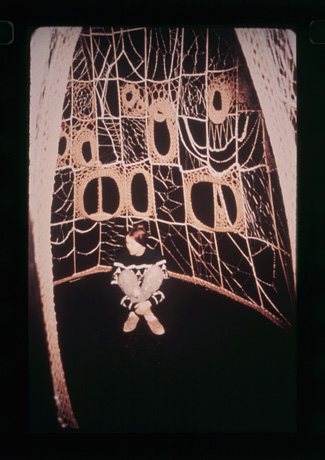
Time is money, there is no avoiding this fact (though Hodgkinson disagrees). What should be re-examined however is how we define our currencies. As the artist Faith Wilding so eloquently proclaims in her fabulous essay Monstrous Domesticity (1995), 'I am for an economics of care', a broader definition of work and labor in which the value of an action or product is measured according to its functional use by an individual, another person, or community. It is a call to redefine our places in the world, to reconsider the resonance of our actions and to recognize the abilities we have as individuals. Wilding's essay focuses on a strong interest in domestic craft and work by young people and their absolutely alien relation to it; "Monstrous Domesticity" is a reflection on this contemporary lack of ancient knowledge and the desire to re-incorporate those lessons into our daily lives. She speaks about her college age art students' interest in learning such basic domestics skills as knitting and sewing - traditional women's work - which was never included as part of their expected learned-skill vocabulary. These students, she says, had no means of understanding this type of work from first hand learned experience and therefore could only gain an understanding of it as a nostalgic work-process, their final product taking exaggerated forms.

The desire for domestic knowledge expressed by Wilding's students is the same outcry for a redefinition of our notion of "work". We don't produce for ourselves, and we know - instinctually, perhaps - that there is something very wrong about that. Producing for ourselves is a survival skill, a skill of care. The only economics or currency that can ever truly matter is how much and how well we care for ourselves and each other. Hodgkinson's definition of idleness as self-defined personal freedom is exactly this as well. Giving ourselves the time and liberty to find contentness and being content with the things we have and the things we can produce for ourselves - this is ultimately the only way to lead a satisfied life, a life truly worth living. Isn't that drive then the key to survival?


Faith Wlding, Crocheted Environment (Womb Room)
1972 (recreated 1995)

9.08.2008

Native Philadelphia

This is all that’s left of my heartfelt attempt at a lovely lavender-filled window box for the bathroom.


A sad, dried up rotten corpse.

The one to blame? This damn palm tree grass thing that sprouted up a few weeks ago. Fine. If it insists on being the greenest grass, I'll just let it be.
Whatever.
So I went out to the sidewalk and pulled up all the weeds sprouting from every little crack and stuck them in the dirt right next to that guy. Hello “Native Garden”! Now you all have to share. Deal with it. I wanna see who wins.
Hey, if you can’t beat ‘em, you still don’t have to join them. Just mess with them a bit.


The thing is, weeds really are just native plants. These are the flora growing all around us whether we want them there or not. As evident below, North Philly apparently caught on to this a while ago.


It’s our manicured gardens that really have a tinge of absurdity to them, not that I’ve got anything against the obscenely unnatural (link). Gardens are the perfect little refuges from urbanity, precisely planned and kept to serve as our individual ideal syntheses of nature’s most extreme examples of aesthetic beauty. Gaston Bachelard in his fabulous book Species of Spaces muses on his experience of his own garden as tool for observing and interacting with the world outside of the human, the realms of flora and fauna; the garden space exists as a sort of neither/nor site, never fully controlled or controllable by humans (weeds and parasites being the perfect examples for this) yet also far from being wilderness.

I am envious of my neighbor two doors down who has been cultivating a mini jungle of grape vines behind her plot on our block of tightly squeezed together row houses. They reach to the roof of her house and cling over the chicken wire ceiling that hovers above the backyard. The growth is so dense they form a vine cave, making it appear as though she’s actually grown an extension onto her house, not a bad idea now that I think of it. It is the ultimate urban retreat, ahiding behind our typical almost tree-less little South Philly street.

I think my moss is intimidated.

9.02.2008

Moss, mostly

Inspired by the ever wonderful Martha Stewart (who shall be henceforth, in this post and in all future, be referred to simply as Martha) and the special feature on her TV show last May, I have started a Moss Wall. Martha’s bit was about growing moss intentionally in various places in the garden and using it purely as plant accessory. The New York Times, of course, soon followed suit with their own fabulous full-page story on moss gardens, coincidentally, focusing on moss in eastern Pennsylvania.
Lovely.

When I lived in Brooklyn I had a stone patio in place of a backyard; now that I live in South Philly, the great wasteland of cheese steaks, sidewalk lawn chairs and cracked cement as far as the eye can see, I’ve kind the same deal here. The beauty of moss? It’ll grow anywhere, and many kinds love rock or pavement. The idea clicked, and I am now trying to cover my grey back “yard” into a moss jungle.

There are two methods of getting moss to grow where you want it. First, take some already growing clumps of native moss (you can find this on sidewalks, parks, empty lots, wherever) and hot glue them on to a rock or cement surface of your choice. Really. It looks like your pavement has the moss chicken pox for a while, but the moss will begin to spread itself over a couple weeks. The second method also involves beginning with native moss, and then, well, getting it drunk. The basic principal is pretty simple: moss likes to do it, and giving it a couple of beers totally makes it happen.

Mix in a blender on high speed: 2 cups of moss + 1 cup of water + 1 can of beer (I used Yuengling, keep it local, you know) + 1 tsp of sugar. Martha used Miracle grow in place of sugar, but I'd rather not go anywhere near that stuff. The yeast in the beer acts as a fertilizer and because it is live it encourages growth, thus arousing all the spores making reproduction seem like a good idea (should I just go ahead and call this my Shag Carpet?). This mixture will be nice and gloppy, about the consistency of pancake batter, and should look opaque in the blender. Then pick your rock or patio or wall spot and simply paint on! Remember Chia Pets? Same idea, just think of your wall as a really, really big terracotta sheep.

I’m starting my moss wall using both methods, gluing on clumps and then painting over and around them on all three walls (not the wall of the house, don’t mess with that). I waited for a day after a heavy storm so moss I collected would be full and the wall would have a bit of residual dampness to it. I glued on about twelve small clumps, none larger than my palm, around the wall underneath and near the slight lip at the top. Then I painted my mixture on the upper third of the back wall, allowing for any drips or irregularities. Moss likes damp and shade, so I’m giving it a light spray with the hose everyday.

You probably have some moss growing in your backyard somewhere, so you should certainly start with trying to encourage that to grow and spread more. Using moss from your neighborhood is definitely preferable as the spores for those species are already in the air. Also, look for moss growing on similar rock or pavement as that which you are trying to grow on.

There are loads of other moss spreading mixtures, buttermilk or yogurt come up just as often. Unfortunately, this method does not allow for your moss to be straight edge and vegan, if that’s your thing, but hey if you find another alternative let me know! Maybe soy yogurt?

I’ve included some great links at the bottom, many of which have other moss + culture mixtures. Good luck! Have fun.

The Artistic Garden
Oregon State Botany dept. site
Heavy Petal: Moss Graffiti!
that last one is totally my favorite.


grow little green ones, grow!

8.28.2008

Coming up roses

Last week I was treated to two very special gifts from a dear friend, both extremely personal, thoughtful and appreciated. I was first surprised with an invitation to go up to his family’s country house in the Catskill Mountains along with a wonderful group of friends (more on this and a recipe later). After of course accepting the invitation I went over to give my thanks in person and was offered another gift; a jar of homemade sweet rose paste made with rose petals picked in his father’s flower garden and made using a recipe and technique learned from his grandmother.

Handmade gifts are absolutely the best – the consideration and care that go into these simple gestures are always cherished - it is the intimate act of personal care that always resonates the strongest. This little jar of (delicious!) rose paste is especially dear as it contains the intimacy of three generations worth of family history and tradition. I asked him if he would give me the recipe or at least a pointer or two and was plainly told “that’s a secret”. Well, okay. Fine. And actually I sort of like that the secret is so guarded, it does after all ensure that this rose paste is like no other; that this is the recipe of the family, and that secrecy is a fraction of a great and fascinating history. I did manage to wrangle a few tidbits of knowledge out of my friend, but I will keep them to myself. Somehow I feel like that’s the appreciative and respectful thing to do.

After a little internet digging I found a recipe for rose jam, though no paste, as well as some other great rose creations that were taken from an issue of “The American Housewife” from 1878. Even better. If you have never tried a sweet rose concoction I highly recommend seeking one out. I fell in love with rose paste after discovering it in Polish baked goods, often used as a filling in cookies or donut-like buns (although this rose paste is Ukrainian). If there is an eastern European neighborhood near you start there. Take the plunge and walk into that hole-in-wall bakery with a window full of bubbling over babkas, sparkling strudels, fruit cakes and cheese breads made using real ingredients you have never heard of. It’s always good to expand your taste horizons, and you might just get an idea for a new taste combination to try yourself.

I started the next morning with my tummy looking forward to a rosey breakfast. I decided on a laid back morning of continuing this train of delight and went about creating my meal. Something fresh baked was needed for sure, yet I didn’t want something so heavy that it would distract from the rose at all. I have always favored popovers for pairing with sweet pungent spreads so I turned to the fabulous “Martha Stewart’s Baking Handbook” and went to work. Popovers can be tricky since they really don’t last well. They just get hard and chewy, so unless you’re baking for a group of people it’s really not worth it to bake a full batch. I went ahead and just made 1/6 of the recipe and I think they came out pretty okay. I used mini muffin pans again, although I don’t recommend doing it that way. Some bakers will tell you that you can never divide a recipe although I’ve never had a problem with it; just be sure to fill all the empty muffin pockets with water so the heat distributes evenly and you don’t burn your pan.

Here’s Martha’s Popover recipe:

Butter for pan
1 1/2 Cups milk
6 large eggs
1 1/2 Cups flour (M. calls for using only all-purpose or white, I cheated and used 1/2 whole wheat and 1/2 white)
3/4 tsp salt
1 1/2 TBS confectioners’ sugar

Preheat oven to 425 degrees, with rack in the lower third of the oven. Butter a popover (or muffin) tin. In a medium bowl, whisk together the milk and eggs. Add the flour, salt, and sugar and whisk until just mixed (should have the consistency of heavy cream). Fill each cup with 5 TBS of batter. Bake until puffed up lovely and high – a little browning on the top is okay – for about 30 mins. Remove from pan asap!
For optimal deliciousness eat asap!


To top off this breakfast, I decided on an appropriate pot of tea. I have a little ceramic pot that holds three cups worth. I infused 1 TBS lady grey (maybe a little less), 1 tsp dried lavender flowers (one of my favorite for tea blends), and a few fresh mint leaves I muddled in the pot (when making a tea infusion keep your fresh leaves separate from the dried – herbs can linger, black and green tea needs to be removed from the water or your tea will get bitter). Perfecto.

8.22.2008

Food and thought (a little background)

I grew up a picky, uninterested eater, and never cared to spend more than 5 minutes preparing a meal. I think at one point I even called pouring out a bowl of cereal and adding milk “cooking”. I became vegetarian (with a mostly vegan diet) when I was 18, a decision largely spurred by sudden lack of my parents’ refrigerator. I knew how chop veggies, make sandwiches, cook some pasta if I felt fancy, but that was about it. With that attitude towards food preparation in place, the addition of a seriously vegetarian boyfriend and domestic partner sealed my dietary fate and I shied away from culinary exploration for a long time. My interest in food didn’t really begin until a few years later when I realized I was unhappy, always in pain for seemingly inexplicable reasons, and was generally very unhealthy. None of this was exclusively due being vegetarian or vegan, but to my lack of critical thought regarding the food going in to my body and my complete ignorance of how it was making me feel.

I never lived on vegan junk food – one can only eat so many Quorn “chicken” nuggets anyway – and I always kept rice and beans and dark leafy vegetables as staples. I became excited to learn about seemingly wonder-foods that were new to me like seitan, quinoa, and kale. But every day would end with me feeling groggy and in great pain from headaches, bloating, cramps, heartburn or all of the above. At one point I was taking a prescription heartburn medicine in conjunction with the strongest over the counter drugs every day and still found no relief. There were many nights when the pain in my stomach and chest was severe enough that I had to sleep sitting up so that my heartburn would be somewhat tolerable. These symptoms became so bad that my left arm would go numb and I would be convinced that I was having a heart attack, ulcers, or a myriad of much worse things. I began to get extreme mood swings and panic attacks on top of all of this, none of which was helped by having a naturally wired and anxious temperament anyway.

It was my panic attacks more than anything else that inspired me to wake up and try to figure out just what was bringing all of this on and what I, independently, could do about it. Like so many people I first consulted online medical sites, which of course convinced me that I was about to die from at least six fatal and extremely rare conditions. Thank goodness I continued searching, and came across a wealth of knowledge in personal blogs and public forums where I found stories from innumerable people who had apparently been through exactly the same things I was feeling. I was also blessed to find a great doctor who was very thorough and careful to make sure that I had no severe conditions. He told me that I my throat lining was scratched – partially eroded actually - from the acid reflux. He also found that I have a mild case of MVP, Mitral Valve Prolapse, a type of heart murmur that is linked to anxiety, exceptionally high production of adrenaline and chronic low blood pressure, and, of course, digestive problems (it’s actually fairly common, found in about 10% of all women and 5% of men – google it!). He suggested that I try an allergy elimination diet; six weeks of very careful eating, watching, and waiting. I’m human, I didn’t do it perfectly, but I did follow the most major points, and for the first time really paid attention what I ate. Most importantly, the weight of all of these experiences happening at once taught me to take a step back, breathe, and learn how to read my body.

As I learned about specific enzyme and vitamin deficiencies that are linked to the physical and emotional problems I was experiencing I began increasing those into my diet. I began to watch my cravings and tried to link them to whatever it was about that specific food that my body was calling for at the time. I give my unconscious brain and the body’s memory a whole lot of credit, and I definitely trust it to know what I may need before being able to translate it to tangible thought. Instinct does precede language after all, and I wonder if such umbrella terms as the “unconscious” simply point to our body’s chemistry…

Stress management and general brain fuzziness sure seem to be related to B vitamin and protein deficiency, something I’m sure I wasn’t giving my body getting enough of. I get major cravings for magnesium and iron heavy foods too. These are small examples, but being able to do something as simple as eating what my body should be eating has made a world of difference.

8.19.2008

Our baking, ourselves

I like knowing what’s going into my food and going into my body and for the things I eat to be useful for it. I don’t think baked goods have to be an exception. Of course I can never pass on a yummy looking cake, especially really absurd birthday cakes with giant frosting flowers (I was recently introduced to Mexican tres leches cake, now officially my favorite), and one day I will learn how to make a proper shortening rich pie crust. Those delights are definitely not for every day, not for me at least. But hey, your tummy is yours and no one else's, you know?

I’ve adapted a baking habit that nicely joins my preference for experimenting with non-traditional ingredients and using whatever I’ve got lying around. I like to bake by the hip and try new things (I also have the attention span of a five-year-old and am incapable of following a recipe, really). I am totally messy and I love getting my fingers all batter-sticky, licking off the spatula when I’m done, and thinking of all the different goodies to throw in as I go. I like giving my baked goods to my friends and neighbors, especially since the favor is almost always returned!

Regarding those aforementioned non-traditional ingredients, I like to mix flours as much as possible and am always on the prowl for new combos. I rarely use wheat alone, and I've found that most things are so much better that way. Below is a recipe I made up recently, following my usual highly refined what-the-hell technique. This is my first time using irish oats, and I am forever sold. These have the great soft chewiness you could expect from regular oats, but are much lighter and have more of a wheat-bread texture. The fruit juice gives these just the right amount of sweet. I used two different egg substitutes here, the silken tofu and the flax. You could use real eggs too of course, but I suggest halving the baking powder and omitting the soda if you do, unless of course you’d like to experiment with making fig popovers! Doesn’t sound too bad actually…

Oatmeal fig muffins

1/2 Cup whole wheat flour
1/2 Cup ground irish oats (or other oat flour)
1 tsp baking powder
1/2 tsp baking soda
1/2 tsp cinnamon
1 TBS ground flax seeds
1/4 Cup silken tofu (soft or firm)
3/4 Cup fruit juice (your choice, I used some apple grape pineapple punch thing)
1/2 Cup chopped dried figs
1/2 cup chopped hazelnuts, walnuts, almonds or cashews


Preheat oven to 375. Lightly oil mini muffin tin or regular muffin tin. In a large bowl, mix the flours, baking powder, baking soda and cinnamon. In a medium sized bowl, whisk together the flax seeds, fruit juice, and tofu. This should be fairly watery, like melted ice cream (although some tofu chunks are okay, your call), add water a teaspoon at a time if necessary. Pour liquid into the dry mix and add the chopped figs and nuts if you like. Fold batter until “just mixed” – for real, otherwise they’ll be totally dense and gnarly. Also, ladies and vegans take note, figs are a great source of iron, and adding a couple TBS of unsulphured molasses would really give these an iron kick.
Bake at 375 for 15-18 mins
Makes 8 mini muffins or 6 regular muffins (I made mine mini)

8.16.2008

Learn to feed yourself.

It is incredibly empowering to realize that we - little old ourselves - have the ability to control our own wellbeing, and all it takes is paying a little more attention, and remembering to take care. This is idea simple, perhaps obvious, though all too often overlooked.

While I’d like to avoid giving Michael Pollan any more airtime, I have to admit that his concise rules for eating “Eat food. Not too much. Mostly plants.” is pretty spot on. I would add one more line to these rules, “Learn how to feed yourself.”
Food is our fuel. That’s all we’ve got, so we better know what to do with it.

I went through a long period of being pretty unhealthy and unhappy. I’ll expand on this later, but it was a great realization to have when I figured out that a poor, or rather unexamined diet was a huge contributing factor to feeling just plain awful all the time. I began to keep track of how I felt after eating what foods and when, and I quickly made some solid cause and effect observations. By many standards I had a great diet; vegetarian and mostly vegan with lots of fruits and veggies, usually bread or rice for grains, and beans, tofu or seitan for protein. The way I was balancing these foods and this overall diet just wasn’t working for me though, and as soon as I began to watch their effects I understood why.

I know that my body just doesn’t like beans very much, they make me fell sluggish and don't seem to leave my system for days. Too much dairy makes me want to hurl. Greasy food gives me a headache. If I eat anything with a high wheat gluten content, seitan especially, it feels like an iron ball in my stomach, same goes for white bread. Yoghurt is the greatest thing on the planet, and everything fermented rules (yes, I include good beer and wine). Spicy stuff is amazing. Tea, herbals, blacks and green, rules. There are many, many delicious grains out there, and I like to use them all. I eat plants in all colors. For now, a 100% non-meat diet just isn’t for me. I drink a lot of water.
I totally still drink way too much coffee, and I like really, really like good beer.
That’s cool. Vices are very important.

Edging away from my eating habits was hard, especially since one of the biggest culprits seemed to be wheat, which is very difficult to escape in the western diet. Celiac disease, which is essentially an auto-immune deficiency triggered by an intolerance to gluten, is terribly under diagnosed and it is estimated that 1 out of every 150 Americans has this potentially life-threatening condition. According to the Mayo Clinic wheat is one of the eight most allergy-causing foods, and symptoms can range from indegestion to asthma and skin reactions (www.foodallergyinitiative.org). The inclusion of wheat in so much of our food makes it an element we rarely think twice about. It is so common that the thought of a wheat allergy doesn't even seem possible.
Well, it is. Take that into consideration if that delicious bagel you had for breakfast has thrown off your system for the rest of the day, and probably the next day too.

As a vegetarian I quickly adopted preparing most of my own meals, but I didn't become very creative with my cooking until these other dietary factors became apparent. I loved baking, and had always been intrigued by vegan baking especially. Vegan baking is a total puzzle, you must avoid butter, eggs and dairy milk, all so key to such a big world of delicious baked good things. Tweaking a recipe to veganize it takes serious critical thought; the work of figuring out what substitutions will work with others and predicting how a taste or texture will be affected is actually pretty fun, really! I have always been incapable of following a recipe anyway, so any excuse to veer off course and experiment a bit is alright with me. Once I figured out that wheat should no longer take center stage, my whole thinking really had to change.

Any grain can be ground and made into flour. The gluten in wheat flour is what produces that great thick melt in your mouth chewiness, and unfortunately you just can't get that texture with anything else. But who says that's got to be the goal? White bread gets boring. Every grain offers different tastes and textures, so why not take the leap and try em all. I like to use a few different flours in combination, and I do usually include a wheat flour as a small portion of that. I use eggs freely now, although that is certainly not my default. If I think a flax seed egg substitute (1 TBS ground flax seed + 3 TBS water) would be more yummy I'll go ahead and use that without question.

I like to bake on a whim, which often leaves me limited to whatever is in the house at the time. I'll take an existing recipe for it's basic proportions of wet to dry to rising agent and go from there. Most of the time I have pretty good results, sometimes it's inedible. It happens. I learn, and try to do it a little better next time.

I'll be posting these little oven fresh inventions as I concoct them. Try em for yourself, or better yet take these for inspiration and create something on your own!

8.15.2008

Domesticity.
Making a place for yourself, sharing your home and your knowledge with others, and caring for one another in turn.

Domestic knowledge is sadly absent in many “home” settings today. Millennia-old traditions concerning food, craft, and personal and interpersonal care are simply no longer taught or shared, and we are enough generations into this phenomena that in many instances this knowledge seems lost beyond recovery. We are approaching a sad and dangerous level of ignorance regarding the most basic crafts of care: food for nourishment, clothing and shelter for warmth, and the knowledge to produce these things so vital to nurturing life and continued survival. People grow up not knowing how to cook, and worse not having a clue about what’s in their food and what they are putting into their bodies. We think remedies are only found in plastic bottles. We have no idea where our winter coats come from, how they were made, what they are made of, or whose hands labored over their construction.

There was a time when all food was to be prepared by hand, often communally, along with recipes, traditions and knowledge about plant and animal use that were passed down through generations. Clothing and shelter were constructed with those same fingers, and the knowledge about what tools and materials to was also crucial learning, shared among families and communities as these life-sustaining items were carefully crafted. These practices are truly timeless, and kept their status as vital lessons in some way through much of the industrial age, yet in recent generations have all but disappeared.

Domestic knowledge implies a great level of mutual care, and places the individual in a critical role of personal responsibility and powerful agency. One should know how to care for themselves and others in the event of an emergency, but this notion of “care” should not be limited to extreme situations. Knowing how to do things for our selves allows us to tap into the potential of our own ability effect the world around us; it is this vital sense of agency that is lost when we no longer have any knowledge of the most basic means of survival.

Our loss of this self-knowledge is the true tragedy of contemporary out-of-the-box living. When an individual has not learned the skill or the knowledge to care for them selves – or is even aware that they could posses such skill – then they have been truly robbed of their agency as a human being. If you can’t use your hands to operate the tools in front of you, what was the use in evolving those awesome opposable thumbs any way? If we do not know how to take care of ourselves, if we do not know how to take care of our families and loved ones, how can we possibly take responsibility for anything around us? If it does not occur to us that we may have the ability to affect our own wellbeing, how will we ever feel that we possess the power to affect anything else?

I’m definitely not a master of household construction of all sorts, and I totally have no clue what I’m doing half the time I try to take on such tasks. Though I would love for some day to own a loom and to have a full vegetable garden, it’s not going to happen right now. And that’s fine. I am certainly not a back to the land extremist or way-anarcho-anti-capitalist, and I even like some corporations (thank you Google for your server space). I definitely love to shop and eat out and would take Pfizer’s advice if I were truly very sick. I am actually pretty optimistic about the future, and am eager for the environmental and lifestyle changes we will all need to make in the coming years. Those changes, however, will require all of us to wake up a bit and rethink how we are acting in and upon the world, and should call us to question the ways others are going about business as well.

We all have a place to start, and it is crucial that we explore these issues with each other. While the tested and true ancient system of gaining knowledge from our families at home is clearly no longer active, we still have our communities and friends as resources. Personal knowledge IS domestic knowledge. The ability to share skills and ideas IS a wonderful human power and should be used. Make something. Use your hands. Take a risk. Ask for advice. Ask someone to teach you something they know how to do. Learn something new together.